UK Bets £100m on a 'World First' AI Biosecurity Lab — With OpenAI and Anthropic Adding £200m
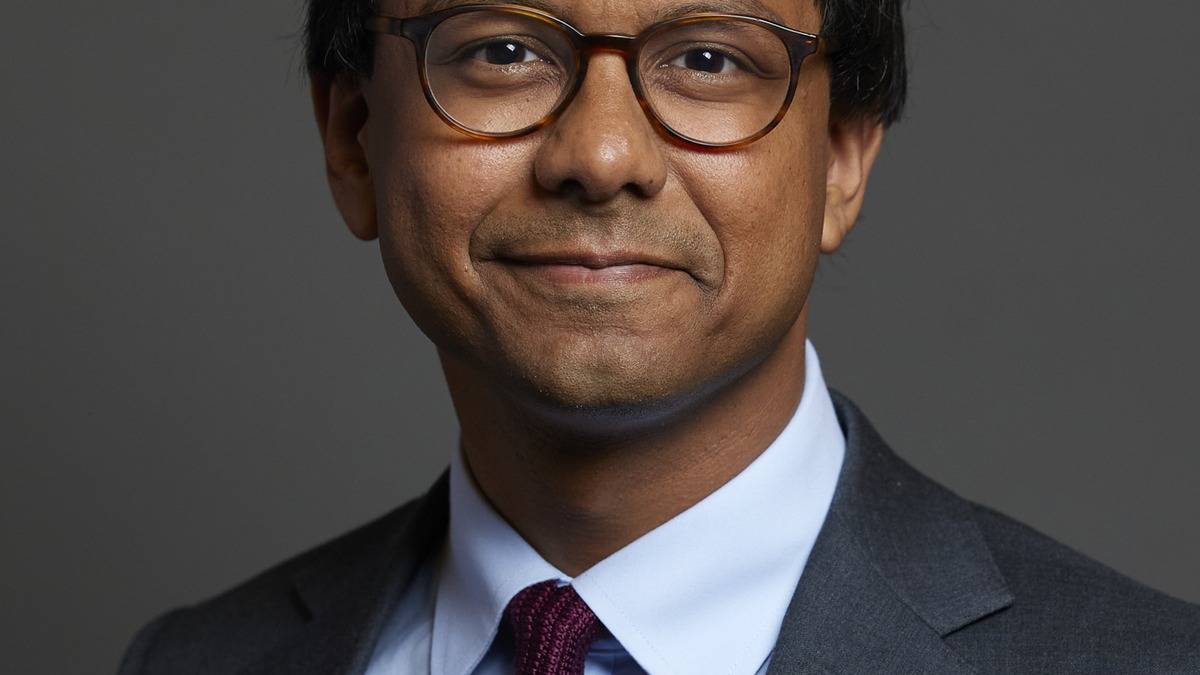
Photo: House of Commons / Laurie Noble, via Wikimedia Commons (CC BY 3.0) — AI minister Kanishka Narayan (file photo)
I have read enough government announcements promising a "world first" to treat the phrase with suspicion. But strip the gloss off this one and there is something new underneath: Britain is about to fund a whole institution whose job is to use frontier AI to spot the next pandemic — or the next bioweapon — before it spots us.
According to GOV.UK, the government will commit £100 million in Wednesday's Budget to a new AI Biosecurity Lab, known as AIBL. The lab is described as the world's first dedicated AI biosecurity organisation. OpenAI and Anthropic will back it with up to £200 million between them in model credits and compute — OpenAI providing £100 million in compute and model credits plus trusted access to its most capable relevant models through its Rosalind Biodefense programme, and Anthropic providing up to £100 million in model credits, trusted access and technical support.
AI Biosecurity Lab: what it will actually do
The lab's first jobs are practical ones: detecting emerging biological threats earlier, and speeding up vaccines, treatments and other medical countermeasures. It will work alongside the UK Health Security Agency, the Animal and Plant Health Agency and the Defence Science and Technology Laboratory, and with the medicines regulator, the MHRA. Google DeepMind and the UK AI life-sciences firm Basecamp Research will partner on research collaborations.
AI minister Kanishka Narayan called the lab a "major new global institution bringing together world-leading scientific expertise", according to the BBC. Chancellor John Healey framed it as a "distinctively British approach to AI" that does not leave workers behind.
Model credits are not cash — and that distinction matters
Here is the part worth reading twice. The £200 million from OpenAI and Anthropic is not money in a bank account. It is access — to their models, their compute, their technical teams. That access could prove enormously valuable — the lab's whole pitch is harnessing frontier AI Britain does not itself own. It also leaves the lab dependent on two American companies whose priorities can shift and whose generosity has a commercial logic behind it. The government's answer is structural: AIBL will be an independent non-profit, with a scientific advisory committee drawn from academia, industry and the third sector.
Enjoyed this guide?
Britain Daily is an independent publication. Every guide is researched, written and carefully edited, and kept free forever. If this saved you time or made your life easier, please don't let the effort go unnoticed — support our work with whatever you can, from $1 upward. Every dollar keeps the guides coming.
💛 Donate via PayPalWhat has not been announced yet is just as telling. There is no location, no named director, and no opening date — the advisory committee's details will, in the government's words, "be set out in due course". The lab is being set up, not switched on. For now, the honest description is a funded plan with heavyweight backers.
Budget AI package: £120m for the AI Security Institute and a National Cyber Shield
The lab does not stand alone — it sits inside a wider AI and cyber spending package. According to the BBC, the Chancellor will commit an additional £120 million to the UK's AI Security Institute, set up by the previous Conservative government in 2023 to evaluate the most advanced AI models. Alongside it comes a £60 million National Cyber Shield using agentic AI to strengthen cyber defences, and a £70 million National Exposure and Real-Time Vulnerability Centre to hunt for weaknesses across critical infrastructure, according to The Brief's report of government materials.
The GOV.UK announcement puts it plainly: AI can accelerate disease research, but increasingly capable systems also create new biological risks and could lower the barriers to harmful activity. Britain's bet is that the technology creating the risk is also the best tool for managing it.
What to watch when the Budget lands on Wednesday
Three questions will tell us whether this is real. First, is the £100 million genuinely new money or repackaged science spending? Second, who runs the lab, where will it sit, and how fast can it hire people who understand both frontier AI and biology? Third — the one that matters most — how quickly does its work reach UKHSA labs and hospital wards?
If it works, £100 million will look cheap the first time it flags a threat weeks early. If it becomes a logo and a press release, the next outbreak or scare will expose that soon enough. Either way, Britain has just made AI biosecurity a Budget item. That alone is a shift worth watching.
Editor's note: we could not verify a suitable video from a reputable outlet for this story, so this article carries no video embed.
Sources
- GOV.UK — Introducing the AI Biosecurity Lab
- BBC News — UK to invest £100m in 'world first' AI Biosecurity Lab (23 October 2026)
- The Brief — UK plans £100m AI Biosecurity Lab in Budget
- AI Weekly — UK Commits £100M to AI Biosecurity Lab With OpenAI, Anthropic
Enjoyed this guide?
Britain Daily is an independent publication. Every guide is researched, written and carefully edited, and kept free forever. If this saved you time or made your life easier, please don't let the effort go unnoticed — support our work with whatever you can, from $1 upward. Every dollar keeps the guides coming.
💛 Donate via PayPal