'Be Ready': Britain Told to Keep 3 Days of Water, Food and Cash as Streeting Warns of Cyberattacks and Supply-Chain Chaos
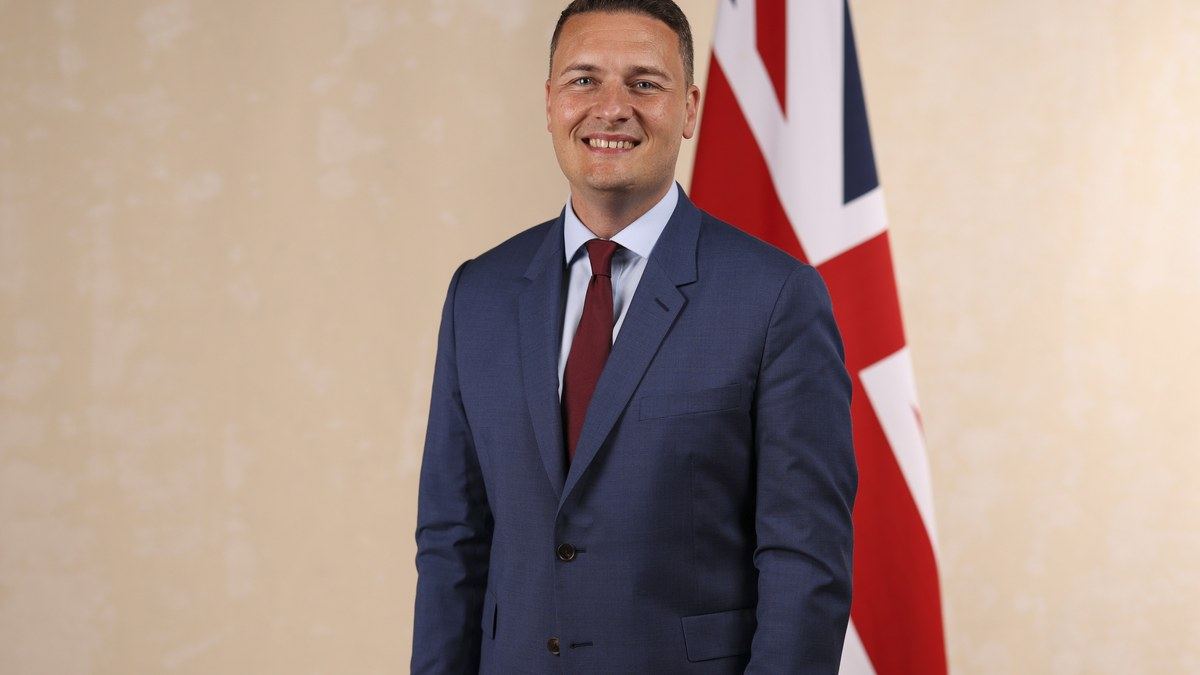
Photo: Lauren Hurley / No 10 Downing Street, via Wikimedia Commons (Open Government Licence 3.0)
Three litres of water a day. That is where the government's new advice starts — three litres of drinking water per person, for three days, sitting in your home right now. For a family of four that is 36 litres, and it is only item one on a checklist Westminster launched on Thursday.
The three-year "Be Ready" campaign, unveiled by Defence Secretary Wes Streeting, asks every household in Britain to build up enough supplies to look after itself for 72 hours if everyday services are knocked out. According to the official guidance, that means nine litres of bottled water per person, three days of food that keeps without a fridge or cooking, a torch, a battery or wind-up FM radio, a charged power bank, cash, blankets, a first aid kit, hand sanitiser, warm clothing and your essential medicines. Families with babies are urged to keep formula, nappies and wipes in stock, and everyone is told to write down the frequencies of the radio stations they listen to for news during an outage.
What the Be Ready campaign checklist tells you to keep
Households should also prepare a "grab bag" for leaving home in a hurry and keep some cash at home — new this time round. The government stresses nobody should panic-buy: build it up gradually in the weekly shop. More than 500 organisations have signed up to spread the message, according to The Times.
Why Streeting launched the national resilience conversation now
Streeting chose to launch the conversation standing in front of a brand-new gun barrel factory in Telford, Shropshire, and he did not mince his words. The country, he said, must be ready for food shortages and disruption to essential supply chains caused by cyberattacks, "state-sponsored terrorism" and natural disasters — and the crises facing Britain could get worse.
"It's really important we ask households and businesses: are they prepared?" he said. "Are they ready? Do they know how they would respond in the event of everyday challenges that might manifest themselves? Are they prepared for the eventuality that there may be disruption to essential supply chains caused by hostile state actors or terrorists? How would we cope if the payment systems of the supermarkets went down?"
Enjoyed this guide?
Britain Daily is an independent publication. Every guide is researched, written and carefully edited, and kept free forever. If this saved you time or made your life easier, please don't let the effort go unnoticed — support our work with whatever you can, from $1 upward. Every dollar keeps the guides coming.
💛 Donate via PayPalStreeting said the issue had to be taken seriously as concerns grow over the risk of conflict with Moscow, though he told a Question Time audience there was no "specific thing" in mind — the supplies would just as easily see you through a power cut or a cyberattack on your local shop's tills.
'Alert not alarmed' — Streeting rejects the scaremongering charge
Asked whether telling 70 million people to keep emergency rations was fear-mongering, Streeting said he wanted the public to be "alert but not alarmed". Security Minister Dan Jarvis said households coping on their own lets emergency services prioritise those most in need, and the government notes similar guidance is "a normal part of everyday life" in France, Ireland and the Netherlands.
On 26 September he told The Sun on Sunday that people should keep cash, bottled water and some tinned goods at home — "just a simple ask".
The harder conversation behind the checklist
But there is a harder edge to the campaign, and Streeting did not hide it. Dr Darren Mann, a former army combat surgeon involved in national wartime medical planning, told The Times that households can sort food, water and communications from the kitchen cupboard — but "Nato's other requirements, from managing mass casualties to keeping transport and the health system running under strain, cannot be met from the kitchen cupboard. That is where the harder conversation begins."
The checklist is sensible and costs next to nothing — most of you likely have half of it in a drawer already. What is new, and worth taking seriously, is that a British government is now saying out loud that supermarket tills going dark or a foreign power probing our infrastructure are "everyday challenges" to plan for, not edge cases.
Sources
- The Times — Prepare for food shortages and disruption, Wes Streeting warns the public (22 October 2026)
- The Oldham Times (PA) — Streeting urges public be 'alert not alarmed' amid call to stock up for a crisis (22 October 2026)
- Prepared Britain — Why is the UK government advising households to stockpile? (22 October 2026)
- Brit Brief — Brits told to stockpile three-day emergency supplies under new Government campaign (22 October 2026)
- British Bulletin — Streeting: Prepare For Supply Chain Disruption From Cyber Or Climate Emergencies (22 October 2026)
Enjoyed this guide?
Britain Daily is an independent publication. Every guide is researched, written and carefully edited, and kept free forever. If this saved you time or made your life easier, please don't let the effort go unnoticed — support our work with whatever you can, from $1 upward. Every dollar keeps the guides coming.
💛 Donate via PayPal