IMF Upgrades UK Growth Forecast to 1.3% — But Warns Inflation Will Stay Higher for Longer
Britain's economy will grow faster than expected this year — but households should brace for prices to keep climbing. That was the double-edged verdict from the International Monetary Fund on Tuesday, as its latest World Economic Outlook upgraded UK growth to 1.3% for 2026 while warning that inflation will average 3.3% this year and stay higher for longer than previously thought.
According to Reuters, the IMF raised its forecast for British expansion from 1.0% in July — and just 0.8% back in April — putting the UK in the middle of the pack among major advanced economies. But the same report trimmed next year's growth outlook to 1.2%, from 1.3%, and warned that higher energy prices and long-term interest rates will weigh on consumption and investment.
IMF UK growth forecast: what the numbers say
The headline figure is the upgrade. According to Sky News, UK gross domestic product is now set to grow by 1.3% this year, up from a predicted 1% rise. The improvement reflects stronger-than-feared first-half growth: according to The Guardian's business live blog, UK GDP grew 0.6% in the first quarter and 0.5% in the second.
But the IMF's message on 2027 is deliberately sobering. Growth is expected to edge down to 1.2% as higher energy prices and long-term borrowing costs bite. Long-term government borrowing costs in Britain hit their highest since 1998 last week, according to Reuters — a reminder that the bond market, not just the Bank of England, now sets the price of the government's room for manoeuvre.
There was also a rare bright spot on jobs. According to Sky News, the labour market has proved more resilient than expected, with UK unemployment now set to average 5.3% this year rather than the 5.6% previously pencilled in — up from 4.9% in the three months to the end of July.
UK inflation 3.3%: why prices stay high
The harder half of the IMF's verdict concerns prices. Consumer prices are set to rise by 3.3% across 2026, according to QNC News — up from the fund's earlier prediction of 3.2% — driven by higher food and energy costs linked to the conflict in the Middle East. That would make Britain's inflation rate the joint second-highest among the G7 group of advanced economies.
The squeeze is far from over. According to Sky News, inflation is expected to persist at a higher rate for longer than previously forecast, easing only to an estimated 2.8% next year — significantly higher than the 2.4% previously projected. The most recent figures from the Office for National Statistics showed inflation at 3.1% in August, and it is expected to tick higher over the coming months as higher household energy bills feed through.
Enjoyed this guide?
Britain Daily is an independent publication. Every guide is researched, written and carefully edited, and kept free forever. If this saved you time or made your life easier, please don't let the effort go unnoticed — support our work with whatever you can, from $1 upward. Every dollar keeps the guides coming.
💛 Donate via PayPalThe Bank of England has said it expects UK inflation to rise to slightly above 4% in the first four months of 2027, in part because of another increase in the household energy price cap in January, before falling back later in the year.
The IMF also pointed to a force pushing the other way: AI adoption has given many global economies an extra lift this year, according to Sky News. But it warned that a prolonged Middle East stalemate or escalation could keep energy and food prices elevated and volatile — a risk amplified by extreme weather, cyberattacks and attacks on energy infrastructure.
What it means for the Budget on 28 October
The forecast lands two weeks before Chancellor John Healey delivers his first Budget on 28 October. According to Sky News, Healey said Britain's economy was showing strong international resilience, adding that the country is forecast to be the joint second fastest-growing G7 nation in 2026 and to have the lowest deficit in the G7 by 2031. He said he would meet finance ministers in Bangkok at the IMF and World Bank annual meetings to discuss limiting the impact of conflicts.
The opposition was unimpressed. According to Sky News, shadow chancellor Andrew Griffith said Healey must tackle both problems in the Budget by getting Britain drilling and dealing with out-of-control welfare spending — and warned that more tax rises would mean slower growth paid for by working people.
The Institute for Fiscal Studies has warned that the Budget will be a work of fiction unless Healey explains how he will deal with tens of billions of pounds of future spending pressures. The IMF's numbers sharpen that dilemma: growth is a little better, but inflation is worse, borrowing costs are at a 27-year high, and the fiscal headroom the chancellor hoped for is thinner than it looked in the summer.
For households, the takeaway is simpler: the economy is growing and jobs are holding up — yet the weekly shop, the energy bill and the mortgage will keep biting.
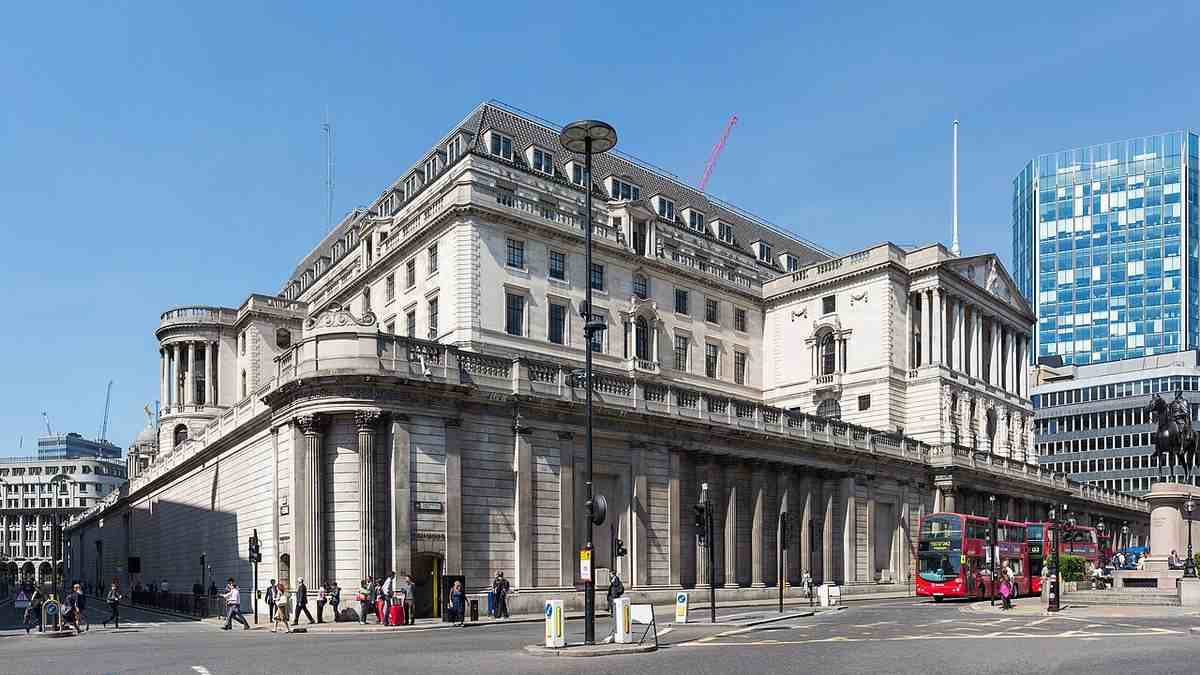
Photo: Bank of England Building, London, by Diliff (CC BY-SA 3.0), via Wikimedia Commons.
Sources
- Reuters — IMF sees higher energy prices and interest rates hitting UK growth
- Sky News — UK economy to grow more than expected, but households face sharper rise in inflation, IMF says
- The Guardian — business live: IMF raises UK growth forecast (via Ghanamma)
- QNC News — IMF raises UK growth forecast to 1.3% but warns inflation will stay higher for longer
Enjoyed this guide?
Britain Daily is an independent publication. Every guide is researched, written and carefully edited, and kept free forever. If this saved you time or made your life easier, please don't let the effort go unnoticed — support our work with whatever you can, from $1 upward. Every dollar keeps the guides coming.
💛 Donate via PayPal