Tesco's Supreme Court Door Closes: 16,000 Shop Workers' Equal Pay Fight Takes a Big Step Forward
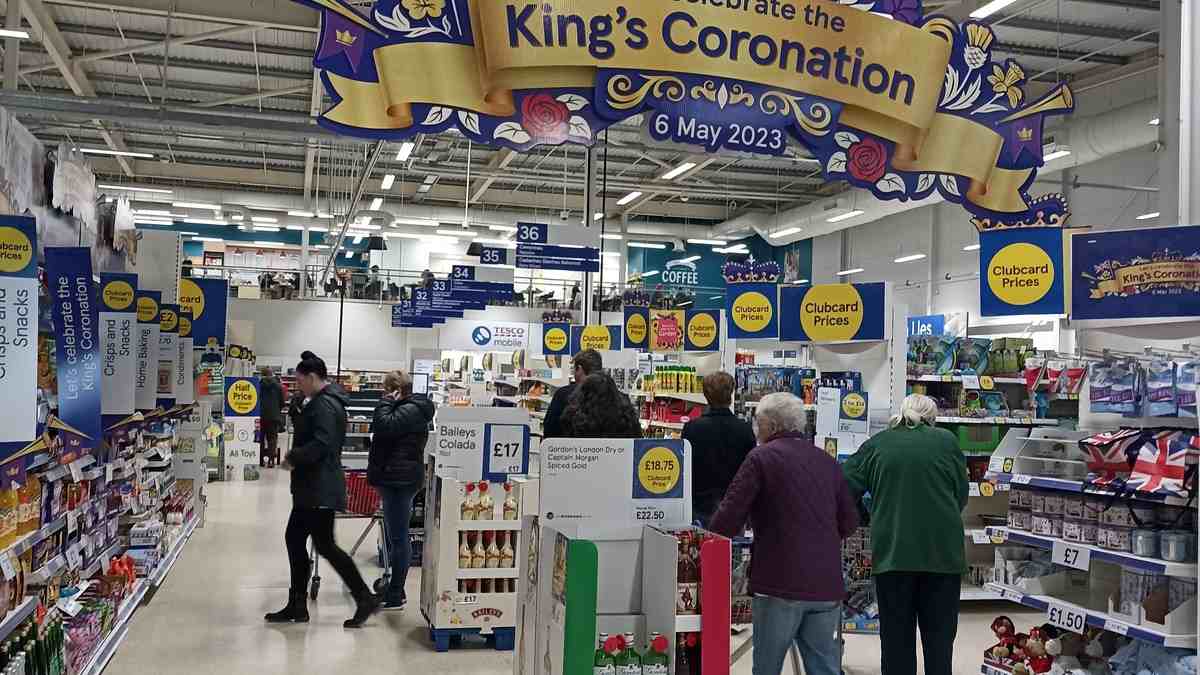
Photo: Melenn14, via Wikimedia Commons (CC0) — inside a Tesco Extra store (file photo)
For eight years, Tesco's shop workers have been told their case is complicated. This week, the highest court in the land declined to make it more complicated — and for the 16,000 workers represented by Leigh Day, that counts as a win.
The UK Supreme Court has refused Tesco permission to appeal a key ruling in its long-running equal pay dispute with shop workers. The decision, in Tesco Stores Limited v Ms K Element and others (UKSC/2026/0094), was dated 29 September 2026, from Lord Reed, Lord Hamblen and Lady Simler. Their reason was short: the application "does not raise an arguable point of law of general public importance which the Supreme Court ought to hear at this time". Reported widely on 23 October by Law360, Personnel Today and Retail Gazette, it leaves a Court of Appeal judgment from May 2026 standing.
Tesco equal pay: what the Supreme Court actually decided
But first, what this ruling is not. The Supreme Court did not decide Tesco's shop workers are underpaid, or that shelf-stacking equals distribution-centre work. What it decided was a narrower, procedural question: when an employment tribunal works out what jobs actually involve, at stage 2 of the equal value procedure, can it rely on Tesco's own training materials and operational documents?
The Court of Appeal said yes, in May 2026. Tesco had argued the tribunal should not lean on its training manuals and operational documents to establish what customer assistants and warehouse operatives are required to do. The judges disagreed: Tesco operates in a highly regulated environment with sophisticated stock systems and training materials designed to keep work consistent across stores — and, absent clear evidence to the contrary, those documents could show what staff were required to do.
Why Tesco's own training manuals matter so much
Think about the alternative: if tens of thousands of shop workers each had to prove, person by person, exactly what their working day involved, the case would take forever and cost a fortune. Tesco's own documents cut through that: the company trains staff to do the same tasks the same way in every store, because consistency is the whole point of a supermarket chain. The Court of Appeal's answer was, in effect, that Tesco cannot train everyone to a single standard and then argue in court that no standard exists.
Enjoyed this guide?
Britain Daily is an independent publication. Every guide is researched, written and carefully edited, and kept free forever. If this saved you time or made your life easier, please don't let the effort go unnoticed — support our work with whatever you can, from $1 upward. Every dollar keeps the guides coming.
💛 Donate via PayPalThat is why the claimants' lawyers are celebrating. Kiran Daurka, employment partner at Leigh Day, said: "This is a significant outcome for the 16,000 Tesco workers we represent and brings Tesco's challenge on this issue to an end." She added that the courts had confirmed tribunals can rely on an employer's own training and operational materials, which "will help ensure equal pay claims can be determined fairly, proportionately and without unnecessary obstacles".
Tesco's response — and what happens next
Tesco is not conceding anything. A spokesperson told Personnel Today: "The jobs in our stores and distribution centres are different. These roles require different skills and demands which lead to variations in pay, but this has absolutely nothing to do with gender. We are committed to rewarding our colleagues fairly for the jobs they do and work collaboratively with our colleagues and unions to ensure the pay and benefits we offer are fair, competitive and sustainable. Our position in relation to these claims remains unchanged and we continue to strongly defend them."
What happens next for the Tesco workers
So the real fight goes on. The claimants — mainly female, hourly-paid store staff — still have to prove their work is of equal value to mainly male distribution-centre operatives' under the Equality Act 2010, then defeat Tesco's market-rates justification. The Supreme Court's case summary puts total claimants at around 60,000, and notes the claimants value the litigation in the billions of pounds. Similar claims are running against Asda, Sainsbury's and Morrisons, according to Retail Gazette.
Eight years in, nobody has been paid a penny extra because of this ruling. But a major procedural roadblock has just been removed, and the path to an answer got shorter. For workers who first brought this claim in 2018, shorter matters — and for every other retailer watching, the message is getting harder to ignore: your own paperwork can now be used to hold you to your own standards.
Editor's note: we could not verify a suitable video from a reputable outlet for this story, so this article carries no video embed.
Sources
- UK Supreme Court — Tesco Stores Limited v Ms K Element and others (UKSC/2026/0094)
- Personnel Today — Tesco equal pay case
- Retail Gazette — Supreme Court refuses Tesco appeal in equal pay case
- Law360 UK — Top UK Court Refuses To Hear Tesco Equal Pay Appeal
Enjoyed this guide?
Britain Daily is an independent publication. Every guide is researched, written and carefully edited, and kept free forever. If this saved you time or made your life easier, please don't let the effort go unnoticed — support our work with whatever you can, from $1 upward. Every dollar keeps the guides coming.
💛 Donate via PayPal