UK Unemployment Falls to 4.7% — But Vacancies Just Hit a 12-Year Low
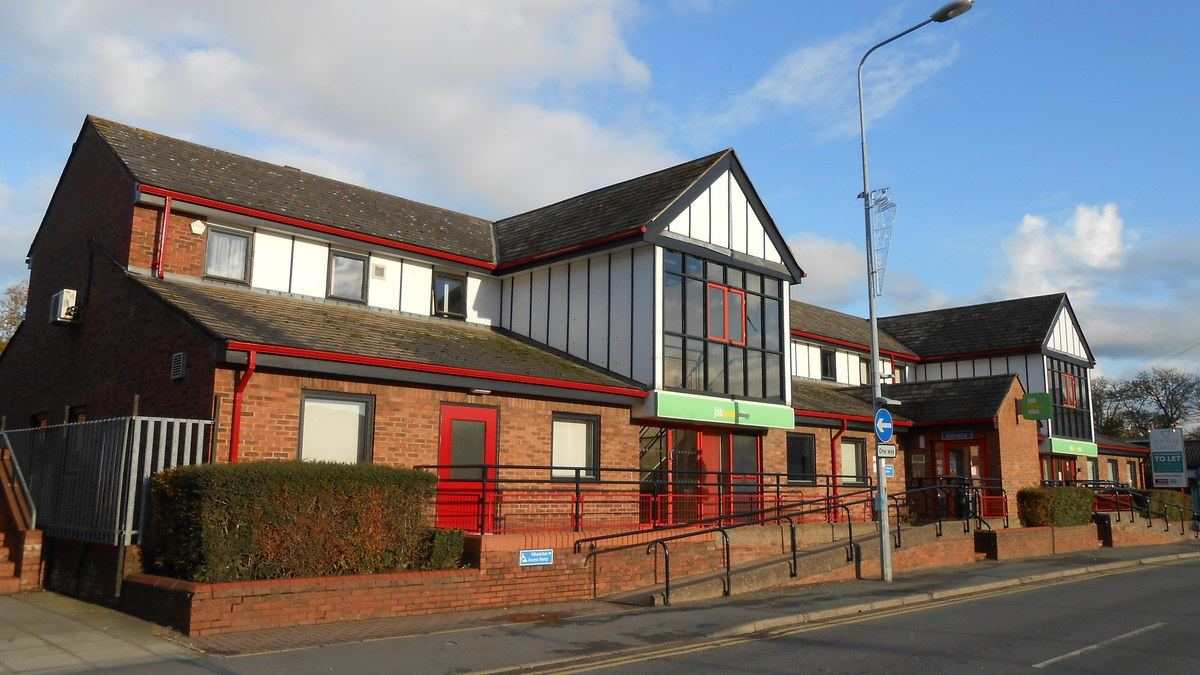
Photo: Rept0n1x via Wikimedia Commons — CC BY-SA 3.0. A Job Centre Plus office in Northwich, Cheshire.
Here's a strange one for you. Britain's unemployment rate just fell to its lowest level in over a year — 4.7% — and yet the number of job adverts out there has sunk to a 12-year low. More people are in work. Fewer jobs are on offer. Even the City economists who model this stuff for a living called today's numbers wrong.
The figures, released by the Office for National Statistics this morning, cover the three months to August 2026 — the final snapshot of the jobs market before Chancellor John Healey delivers his Budget next week. Unemployment fell from 4.9% to 4.7%, with the number of unemployed people dropping by 47,000 to 1.712 million, the lowest rate since the three months to July 2025. Employment rose by 102,000 in the quarter to 34.577 million, and the employment rate nudged up to 75.3%.
Then comes the part that made recruiters wince. Vacancies fell by 21,000 — the biggest quarterly drop of the year — to 691,000 in the three months to September. Strip out the pandemic years and you have to go back to July to September 2014 to find a lower figure: 686,000.
Small businesses have stopped hiring
Dig into where the vacancies went and the picture sharpens. The ONS said the collapse is concentrated in smaller firms, and its surveys keep hearing the same explanation: labour costs. The largest fall of all came among firms with between one and nine employees — down 21,000 vacancies all on its own.
Construction took the biggest sectoral hit, down 7,000 vacancies. Across the board, vacancies fell in 14 of 18 industry sectors and in four of five business size bands. This isn't a blip in one corner of the economy — it's a broad, deliberate pullback from hiring.
"While the labour market remains broadly flat in 2026, data from the latest quarter shows the employment rate edging up and a small drop in unemployment," said ONS deputy director of labour market statistics David Freeman. "The number of vacancies has seen its largest fall since the start of the year, concentrated mainly within smaller businesses, which cite increased labour costs as a key factor."
Pay is still outrunning inflation — just barely
The wage figures are a mixed bag too. Regular pay — excluding bonuses — grew 3.7%, up from 3.5%, and stays ahead of inflation: in real terms, adjusted for CPI, regular pay rose 0.8% on the year.
Enjoyed this guide?
Britain Daily is an independent publication. Every guide is researched, written and carefully edited, and kept free forever. If this saved you time or made your life easier, please don't let the effort go unnoticed — support our work with whatever you can, from $1 upward. Every dollar keeps the guides coming.
💛 Donate via PayPalBut the bonus season is clearly over. Total pay growth, bonuses included, slid to 3.7% — the weakest rate in nearly six years, last lower in the autumn of 2020. The split underneath is telling: public sector pay grew 6.3%, driven by the timing of this year's pay awards, while private sector pay managed only 3.0%.
What this means for the Budget — and your mortgage
More timely payroll data offered a small bright spot: the number of workers on payrolls rose by 13,000 in September, to 30.3 million — defying forecasts of a 15,000 contraction. The ONS stressed these are provisional, but the direction of travel has stopped getting worse.
"The latest figures indicate a labour market showing some resilience," said Jack Kennedy, senior economist at Indeed. "However, the continued slide in vacancies points to ongoing hiring caution and puts major pressure on the upcoming Budget, as businesses seek clarity on what it means for their cost base before committing to expanding their workforce." He was blunt about the rest: "Today's figures confirm a labour market that is treading water. The question is whether the Budget gives employers a reason to start swimming."
For the Bank of England, a jobs market that is weak but not collapsing gives the nine-strong Monetary Policy Committee little reason to swerve. With inflation on course to hit 4% by the end of the year after the outbreak of the US-Iran war, the base rate — frozen at 3.75% all through 2026 — could rise to 4% at the Bank's next meeting on November 3. That would be the first rate rise in three years, and a nasty surprise for anyone remortgaging this winter.
And for young people, the numbers are still bleak. Around 13.3% — roughly 446,000 — of economically active young people not in full-time education are unemployed, 28,000 more than a year ago. The Youth Futures Foundation's Chris Goulden warned the persistence of the NEET problem "will require ambitious, system-level reform."
So: more jobs, fewer vacancies, pay just about keeping its head above water, and a Budget in seven days that small businesses are begging to give them a reason to hire again. Healey has been handed a decent headline. Whether he gets the sequel is up to him.
Editor's note: no broadcast footage from a major UK outlet was available at the time of publication. We will add official video coverage as it becomes available.
Sources
- The Times — Jobless rate falls as labour market shows surprising strength
- FE News — ONS Labour Market Data October 2026: Vacancies Fall to Lowest Level Since 2014
- Hargreaves Lansdown — UK unemployment falls to lowest in a year but vacancies slide further
Photo: Rept0n1x via Wikimedia Commons — CC BY-SA 3.0.
Enjoyed this guide?
Britain Daily is an independent publication. Every guide is researched, written and carefully edited, and kept free forever. If this saved you time or made your life easier, please don't let the effort go unnoticed — support our work with whatever you can, from $1 upward. Every dollar keeps the guides coming.
💛 Donate via PayPal