Orionid Meteor Shower 2026: Peak Time in the UK, Best Hours to Look, and How to Beat the Moon
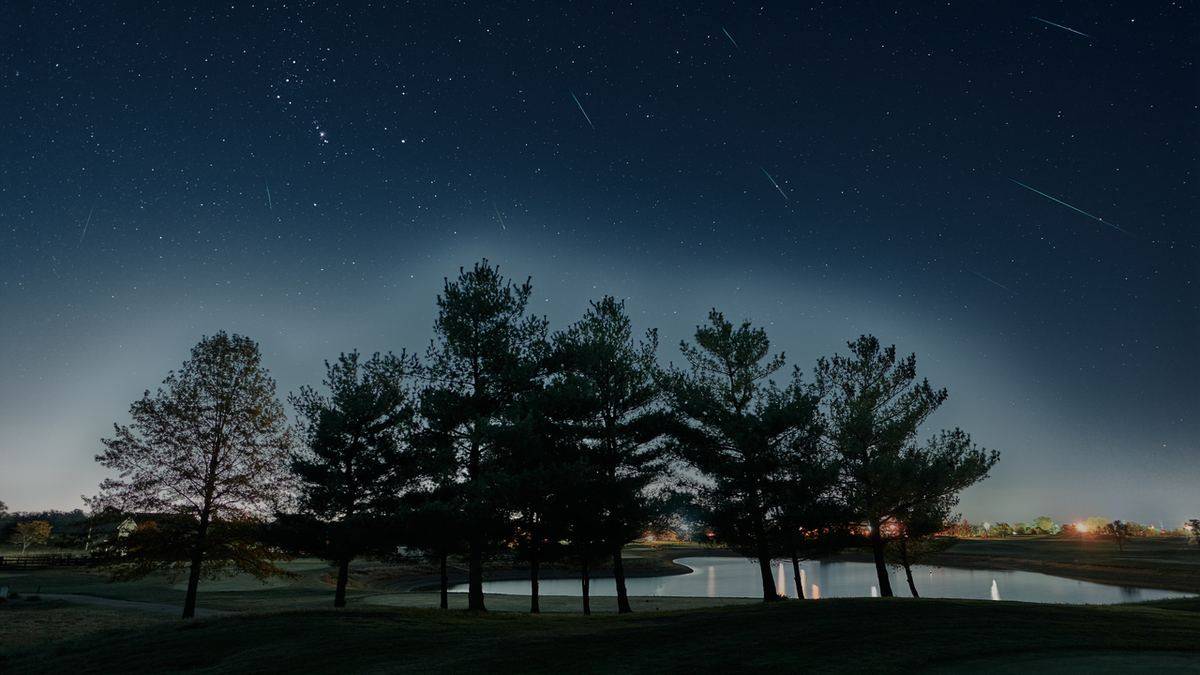
Tonight's plan sounds miserable on paper: an alarm set for 3am, on a Wednesday night, in late October, standing in a cold field somewhere dark in Britain. But the sky has something worth it — the Orionids, the year's most romantic meteor shower, peak tonight.
I say romantic because every streak you see before dawn is a crumb of Halley's Comet, burned up at 66 kilometres per second. The comet last swung past in 1986 and won't return until 2061, so this shower — and May's Eta Aquariids — is the closest you'll get to it.
When is the Orionid peak, and what time should I go outside?
The predicted peak falls on 21 October at 18:00 UTC, according to the RASC Observer's Handbook quoted by EarthSky — but the Orionids have a broad, plateau-like maximum, so the mornings around the peak are all worth your time: 20–21, 21–22, and 22–23 October.
The Moon is the problem: a waxing gibbous, roughly 80 per cent lit, sits high most of the night and washes out the fainter meteors. The good news — the detail every astronomer is hammering home this week — is that it sets early enough to leave a clean window.
In London the Moon drops below the horizon at about 2:47am on Thursday morning, a touch after 3am further west in Plymouth. From roughly 3am until the sky starts brightening around 5:30–5:45am, you've got dark skies exactly when Orion climbs highest. Set the alarm for 3am rather than sitting up from midnight — you'll see more for less time in the cold.
Expect 10 to 20 meteors an hour from a genuinely dark site in that window, maybe 10 to 15 from the UK in practice. From a suburban garden, cut that to five or fewer. In exceptional years like 2006–2009 the Orionids hit 50 to 75 an hour, so the surprise is never off the table.
Where to look: Orion, Betelgeuse, and the trick nobody tells you
The shower is named for Orion, because the meteors seem to fly out of a point near his raised club, just above the bright orange-red star Betelgeuse. Dr Mark Norris, an astronomer at the University of Lancashire, told BBC Sky at Night that for UK observers the constellation rises toward the south-east late at night on the 21st and looks best close to dawn on the 22nd.
But don't stare straight at the radiant. The meteors streak across the whole sky, and the longest, most dramatic ones appear 30 to 60 degrees away from the source. Royal Museums Greenwich's advice: look at the darkest patch of sky you can find, roughly south, and let them come to you.
Enjoyed this guide?
Britain Daily is an independent publication. Every guide is researched, written and carefully edited, and kept free forever. If this saved you time or made your life easier, please don't let the effort go unnoticed — support our work with whatever you can, from $1 upward. Every dollar keeps the guides coming.
💛 Donate via PayPalAnd don't bring a telescope. Your naked eye is the best instrument for this job — meteors cover huge arcs of sky in a fraction of a second.
The honest viewing checklist
Get somewhere dark with an open view — a garden with the outdoor lights off is a start, a field is better. Give your eyes 20 to 30 minutes to adjust — one glance at your phone wipes out your night vision, so switch it off. Wrap up properly — a reclining chair or sun lounger, warm layers, a blanket, a flask. Dress for January, not October.
Then stay put for at least an hour. Meteors arrive in clumps with long quiet spells between — the winners are the ones who don't give up at 3:45am.
Clouds: the part you can't control
One last check before you commit: the clouds. An autumn Atlantic system is doing the rounds this week, and no moon-window maths helps under an overcast sky. The shower stays active from 2 October to 7 November, so if tonight is a washout, try the backup mornings.
And a bonus for the truly committed: the Met Office's autumn sky list flags a planetary alignment in the same pre-dawn hours — Mercury, Venus, Jupiter and Saturn all lined up low in the east as you wait between meteors.
Editor's note: we went looking for a fresh video from a UK broadcaster explaining this year's Orionids and couldn't find one worth embedding — the guides linked below and the pre-dawn sky itself are your best bet.
Sources
BBC Sky at Night Magazine, "One of autumn's best meteor showers peak this week. An astronomer reveals how to see it" (19 October 2026): skyatnightmagazine.com
Royal Museums Greenwich, "Night sky highlights – October 2026": rmg.co.uk
EarthSky, "Orionid meteor shower 2026: All you need to know" (updated 20 October 2026): earthsky.org
Watch the Stars, "Orionids Meteor Shower 2026 UK": watchthestars.co.uk
Met Office autumn sky events, via britbrief: britbrief.co.uk
Photo: Jim Vajda / Wikimedia Commons (CC BY 2.0) — a composite of 19 frames capturing Orionid meteors streaking across the night sky (file photo).
Enjoyed this guide?
Britain Daily is an independent publication. Every guide is researched, written and carefully edited, and kept free forever. If this saved you time or made your life easier, please don't let the effort go unnoticed — support our work with whatever you can, from $1 upward. Every dollar keeps the guides coming.
💛 Donate via PayPal